01 / SCHEDULE
When do people want to come in?
Regular office days give a starting point for understanding attendance plans. Team attendance adds context about who's planning to be together.
Workplace intelligence
A reservation tells you where someone plans to sit. Preferences, schedules and waiting lists add context to the office day they actually want.
A more useful conversation
Use your team's attendance and booking context to ask better questions about your workplace. A full day with a waiting list means something different from a full day with no further requests.
DeskIQ brings those everyday planning choices into focus. Talk to us about the reporting and workplace insights your organisation needs.
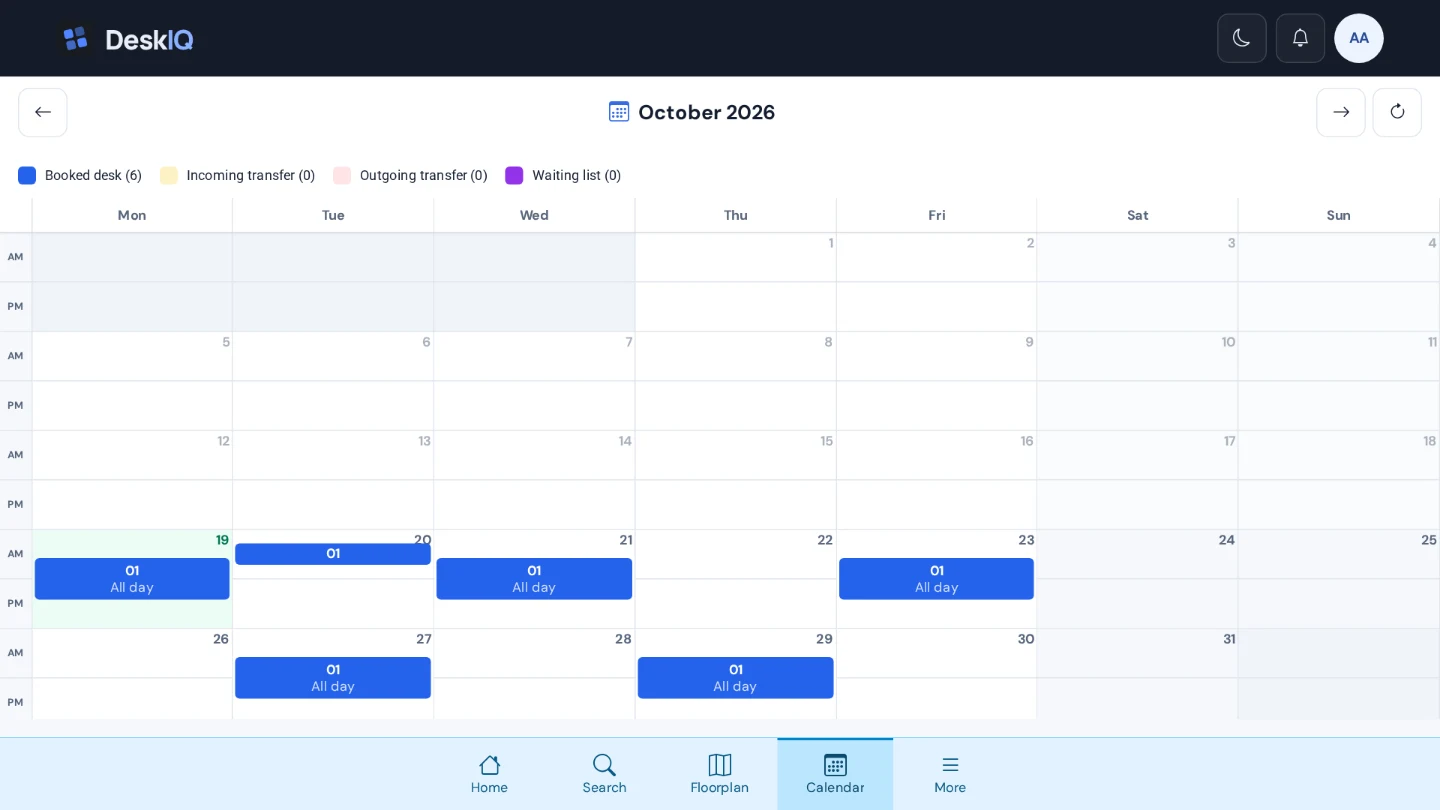
01 / SCHEDULE
Regular office days give a starting point for understanding attendance plans. Team attendance adds context about who's planning to be together.
02 / PREFERENCES
Preferred desks and locations make people's choices visible, beyond a simple count of available seats.
03 / WAITING LISTS
A waiting-list request represents a plan that hasn't yet become a reservation. It helps explain why booked desks alone don't tell the whole story.
04 / CHANGING PLANS
Cancelling an unneeded booking makes space available again. Waiting lists help colleagues find suitable space as it opens up.
Booked desks show plans.
They don't prove that someone attended.
Bring attendance plans, preferences and waiting-list requests into the conversation about your workplace. Tell us which questions your team needs to answer.
Discuss your workplace needs →Make room for a better working day
Find your place, make plans with your team, and let DeskIQ take care of the desk booking.